The mushrooms on this page are known to be the most toxic in North America, while these are not all toxic mushrooms of North America, this consists solely of the worst. If you suspect that you have ingested one, call 911 or get to a hospital asap.
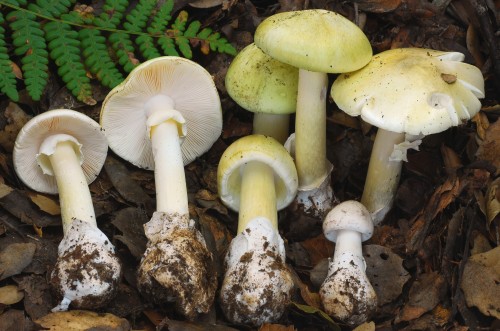
Deathcap (Amanita phalloides) This is known as the world's, let alone North America’s, most toxic mushroom. The cap can vary from greenish yellow to brown, tan, and at times white. This particular species is gilled; these gills are white, and when cut, the flesh remains white. It will normally also feature a skirt on the mushroom stalk; the stalk itself is white or yellowish. This mushroom is responsible for 90% of mushroom-related deaths around the globe, with a mortality rate of 10 to 20 percent with aggressive treatment. It causes liver damage, resulting in multiple organ system failure, and impairs the body's ability to coagulate blood. Symptoms may not even appear for a day or two and may seem minor at first.
Destroying Angel (Amanita bisporigera) This species has an estimated 20-30% mortality rate, which is thought to be mainly due to its many lookalikes. While the initial symptoms of ingesting are shorter than the Deathcap, the Destroying Angel’s symptoms and prognosis are very similar, with one other difference, including not just initial damage to the liver but to the kidneys as well. A liver transplant will be required if action is not taken swiftly. To identify this mushroom, look for a white cap that is convex or flat, possibly with a veil, and smooth or, if wet, sticky. This is a gilled mushroom, and the white gills are detached from the stem, which will have a ring around the upper portion. The stem will have, at its base, a sac-like volva, which is not always prominent and can be buried, but it will be there.
False Morel (Gyromitra esculenta)
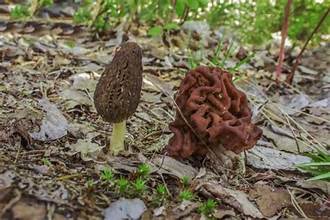
These mushrooms can be easily mistaken for a delicious morel if you are unsure what to look for, as they are unlike a true morel; they do not have a “honeycomb” pattern, and have a reddish tint, unlike the tan to brown of a true morel. The mushroom itself is not hollow; cutting any suspicious morel in half is a tried and true method to test if it is a false morel. While all three documented on this page are poisonous, this is the least of them. This mushroom can cause liver damage, rarely seizures, destruction of red blood cells, kidney damage, and lower ability for blood to carry oxygen; all of this being said, the mortality rate is at only 2 to 4 percent.